
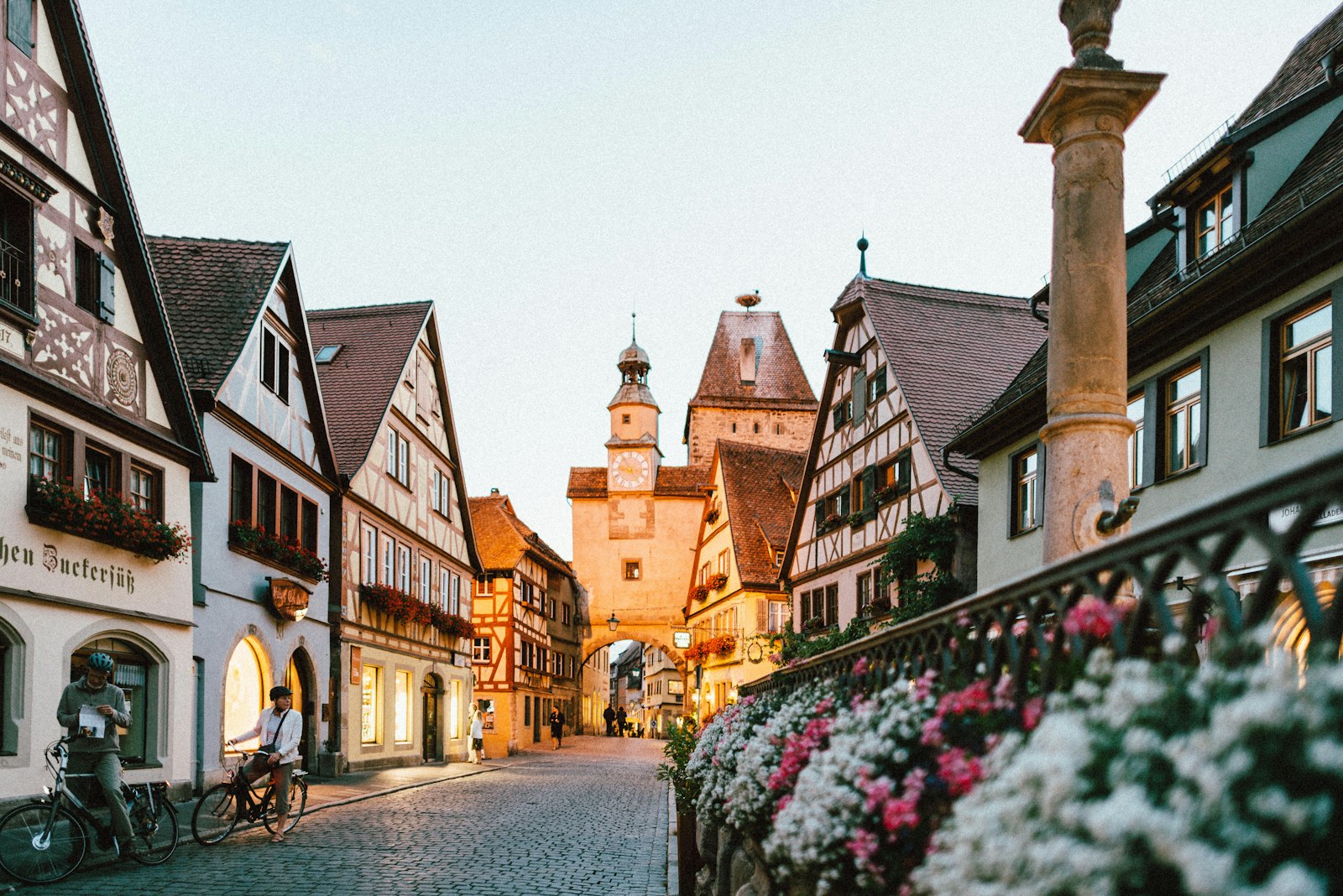
Study in Europe from Bangladesh
Low or no tuition, Schengen travel and English-taught programs across 25+ countries.
Tuition (per year)
€0 – 20,000
Living Cost
€700 – 1,200 / month
Main Intakes
Sep/Oct & Feb/Mar
Part-time Work
~20 hrs / week
Post-study Work
1 – 2 years
Student Visa
National (D) Visa
Why Study in Europe?
Europe offers some of the best value in international education. Public universities in Germany are tuition-free, Italy and France charge low regulated fees, and thousands of programs are taught entirely in English. A student residence permit in a Schengen country also lets you travel across 29 European countries.
Low or No Tuition
Germany’s public universities are free, and Italy, France and others charge low regulated fees.
Schengen Mobility
Travel freely across 29 Schengen countries with your student residence permit.
English-taught Programs
Thousands of bachelor’s and master’s programs are taught fully in English.
Fully Funded Scholarships
Erasmus Mundus, DAAD, Italian regional (DSU) scholarships and many more.
Job-search Visas
Most countries allow graduates 12–18 months to find a job after their studies.
Rich Culture & History
Live in historic cities and experience diverse languages and cultures.
Where to Study in Europe
Each European country has its own fees, living costs and visa rules. Here are the most popular choices for Bangladeshi students.
Germany
Tuition
€0 at public universities (+ €150–400 semester fee)
Living Cost
€992 / month (blocked account)
18-month job seeker permit after graduation; engineering & research powerhouse.
Italy
Tuition
€900 – 4,000 / year (income-based)
Living Cost
€700 – 1,000 / month
Regional DSU scholarships can cover tuition, a stipend and accommodation.
France
Tuition
€2,895 (bachelor’s) – €3,941 (master’s) at public universities
Living Cost
€800 – 1,200 / month
Apply through Campus France; 1-year job search permit after a master’s.
Netherlands
Tuition
€8,000 – 20,000 / year
Living Cost
€1,000 – 1,400 / month
Highly ranked, English-taught; 1-year orientation (search) year.
Ireland
Tuition
€10,000 – 25,000 / year
Living Cost
€1,000 – 1,500 / month
English-speaking EU country; Stamp 1G stay-back of up to 2 years.
Finland
Tuition
€8,000 – 18,000 / year
Living Cost
€800 – 1,100 / month
Generous tuition waivers; 2-year post-study residence permit.
Hungary
Tuition
€3,000 – 8,000 / year
Living Cost
€600 – 900 / month
Affordable medical, engineering & business programs in English.
Poland & Lithuania
Tuition
€2,000 – 5,000 / year
Living Cost
€500 – 800 / month
Very affordable EU degrees with low living costs.
Education in Europe
European universities follow the Bologna system, so degrees are comparable across countries and use ECTS credits. Each country has its own visa and admission process — some, like Italy and Germany, require pre-enrolment or a blocked account.
| Level | Duration | Notes |
|---|---|---|
| Bachelor's Degree | 3 – 4 years | 180 – 240 ECTS |
| Master's Degree | 1 – 2 years | 60 – 120 ECTS · most popular |
| Erasmus Mundus Joint Master’s | 1 – 2 years | Study in 2–3 countries, often fully funded |
| PhD | 3 – 4 years | Often a paid research position |
Popular Universities in Europe
A selection of highly ranked and student-favourite institutions. Our counsellors will shortlist the best fit for your profile and budget.
Technical University of Munich
Munich, Germany
Top technical university in the EU
RWTH Aachen University
Aachen, Germany
Engineering
Politecnico di Milano
Milan, Italy
Engineering, architecture & design
University of Bologna
Bologna, Italy
Oldest university in the world
Sorbonne University
Paris, France
Sciences & humanities
Delft University of Technology
Delft, Netherlands
Engineering
University of Amsterdam
Amsterdam, Netherlands
Business & social sciences
Trinity College Dublin
Dublin, Ireland
Ireland’s top university
University of Helsinki
Helsinki, Finland
Research-intensive
University of Debrecen
Debrecen, Hungary
Medicine & engineering
Vilnius University
Vilnius, Lithuania
Affordable EU option
University of Warsaw
Warsaw, Poland
Poland’s leading university
Most In-demand Courses
When Can You Start?
Start your application early — popular courses and scholarships fill up fast.
September / October
Winter semester · Main intake
Most programs. Deadlines are typically January – May.
February / March
Summer semester
Fewer programs (mainly Germany). Deadlines around July – October.
Rolling
Private universities
Some private institutions accept multiple intakes.
Tuition & Living Costs in Europe
Tuition Fees
- Germany (public)Tuition-free (semester fee only)
- Italy & France (public)€900 – 4,000 per year
- Central & Eastern Europe€2,000 – 8,000 per year
- Netherlands, Ireland, Nordics€8,000 – 25,000 per year
- Private Universities€8,000 – 20,000 per year
Living Expenses
- Accommodation€300 – 800 / month
- Food€200 – 350 / month
- Transport€30 – 80 / month (student passes)
- Health Insurance€30 – 130 / month
- Other Expenses€100 – 200 / month
Germany requires a blocked account of €11,904 per year (€992 per month). Other countries ask for bank statements showing similar funds. Southern and Eastern Europe are generally cheaper than Western and Northern Europe.
Scholarships to Study in Europe
Strong academic results, a good English score and an early application all improve your chances.
Erasmus Mundus Joint Master’s
Fully funded — tuition, travel and a monthly allowance — for study in 2 or more European countries.
DAAD Scholarships
German Academic Exchange Service scholarships for master’s and PhD students from developing countries.
Italian DSU Regional Scholarships
Need-based scholarships covering tuition, a stipend of several thousand euros and free meals or housing.
Eiffel & Holland Scholarships
Government scholarships for international students in France and the Netherlands.
Admission Requirements for Bangladeshi Students
Requirements vary by university and course — these are typical ranges.
Academic
Bachelor's
HSC with strong GPA; Germany may require a foundation (Studienkolleg) year
Master's
Relevant bachelor's, typically CGPA 2.5 – 3.0+; some ask for APS / uni-assist
Medicine
HSC science with high GPA; entrance exam for some universities
Study Gap
Accepted with explanation, varies by country
English Proficiency
- IELTS Academic6.0 – 6.5 (master’s)
- TOEFL / PTEAccepted at most universities
- MOI LetterAccepted by some universities (e.g. Italy, Hungary)
Documents Checklist
- Valid passport
- Academic certificates & transcripts (legalised/attested)
- IELTS / TOEFL score or MOI
- Motivation letter & CV (Europass format)
- Letters of recommendation
- Admission / acceptance letter
- Blocked account or bank solvency
- Health insurance & accommodation proof
National Student (D) Visa
Each country issues its own long-stay student visa. Apply at the relevant embassy or VFS centre — some countries process Bangladeshi applications through their embassy in New Delhi. Appointment waiting times can be long, so plan early.
Visa Fee
€75 – 100 (varies)
Germany Funds
€11,904 blocked account
Processing
4 – 12 weeks
Interview
Usually at embassy
Step-by-step Visa Process
- 1Choose country, university and program
- 2Apply (uni-assist, Universitaly, Campus France etc.)
- 3Receive admission letter
- 4Open blocked account / arrange funds
- 5Book embassy or VFS appointment
- 6Attend visa interview with documents
- 7Register and get residence permit after arrival
Work While You Study & After Graduation
During Your Studies
Most countries allow around 20 hours per week during term. Germany allows 140 full days or 280 half days per year; France allows 964 hours per year.
After Graduation
Graduates usually get a job-search permit — 18 months in Germany, 12 months in France, Italy and the Netherlands, and up to 2 years in Ireland and Finland — and can then switch to a work permit or EU Blue Card.
Learning the local language (e.g. German) greatly improves job prospects.
How Lexis Helps You Study in Europe
From your first counselling session to the day you fly — we support you at every step.
Free Counselling
One-to-one session to understand your profile, budget and goals.
Country & University Selection
Shortlist the right universities and courses for your academic background.
Application & Offer Letter
We prepare and submit your applications and follow up on offers.
IELTS / PTE / TOEFL Preparation
In-house test preparation at Lexis to reach the score you need.
SOP & Document Support
Guidance on Statement of Purpose, CV and financial documents.
Visa Filing & Interview Prep
Complete visa file preparation and mock interviews.
Scholarship Guidance
Find and apply for scholarships you are eligible for.
Pre-departure Briefing
Accommodation, travel and settling-in support before you fly.
Your Study Abroad Journey
Free Counselling
Discuss your goals, academic profile and budget with our counsellors.
English Test
Prepare and sit IELTS, PTE or TOEFL with Lexis.
University Application
Choose courses and submit applications with the right documents.
Offer & Acceptance
Receive your offer, accept it and pay the deposit.
Visa Application
Prepare your financials and file your student visa.
Fly & Settle
Pre-departure briefing, accommodation and arrival support.
Frequently Asked Questions about Europe
Is study in Germany really free?
Public universities in most German states charge no tuition — you only pay a semester fee of about €150 – 400. However, you must show €11,904 per year in a blocked account for living costs.
Can I study in Europe without IELTS?
Some universities in Italy, Hungary, Poland and other countries accept a Medium of Instruction (MOI) letter. However, IELTS is strongly recommended for visa interviews and top universities.
Which European country is best for Bangladeshi students?
Germany for low-cost engineering, Italy for scholarships, Ireland and the Netherlands for English-speaking careers, and Hungary or Poland for affordability. Our counsellors match the country to your profile and budget.
What is Erasmus Mundus?
A fully funded EU scholarship for joint master’s programs taught across 2 or more European universities. It covers tuition, travel and a monthly allowance.
Can I travel across Europe on a student visa?
Yes, a residence permit from a Schengen country lets you travel to other Schengen countries for up to 90 days in any 180-day period.
Other Study Destinations



Ready to Study in Europe?
Talk to our counsellors for a free profile assessment and a personalised university shortlist.
Get Free CounsellingFees, funds requirements and visa rules are indicative and change frequently. Please confirm the latest information with our counsellors or the official immigration website before applying.